
Our Blog.
SurveyMonkey vs Typeform (2026): Which Form and Survey Platform Is Better for Business?
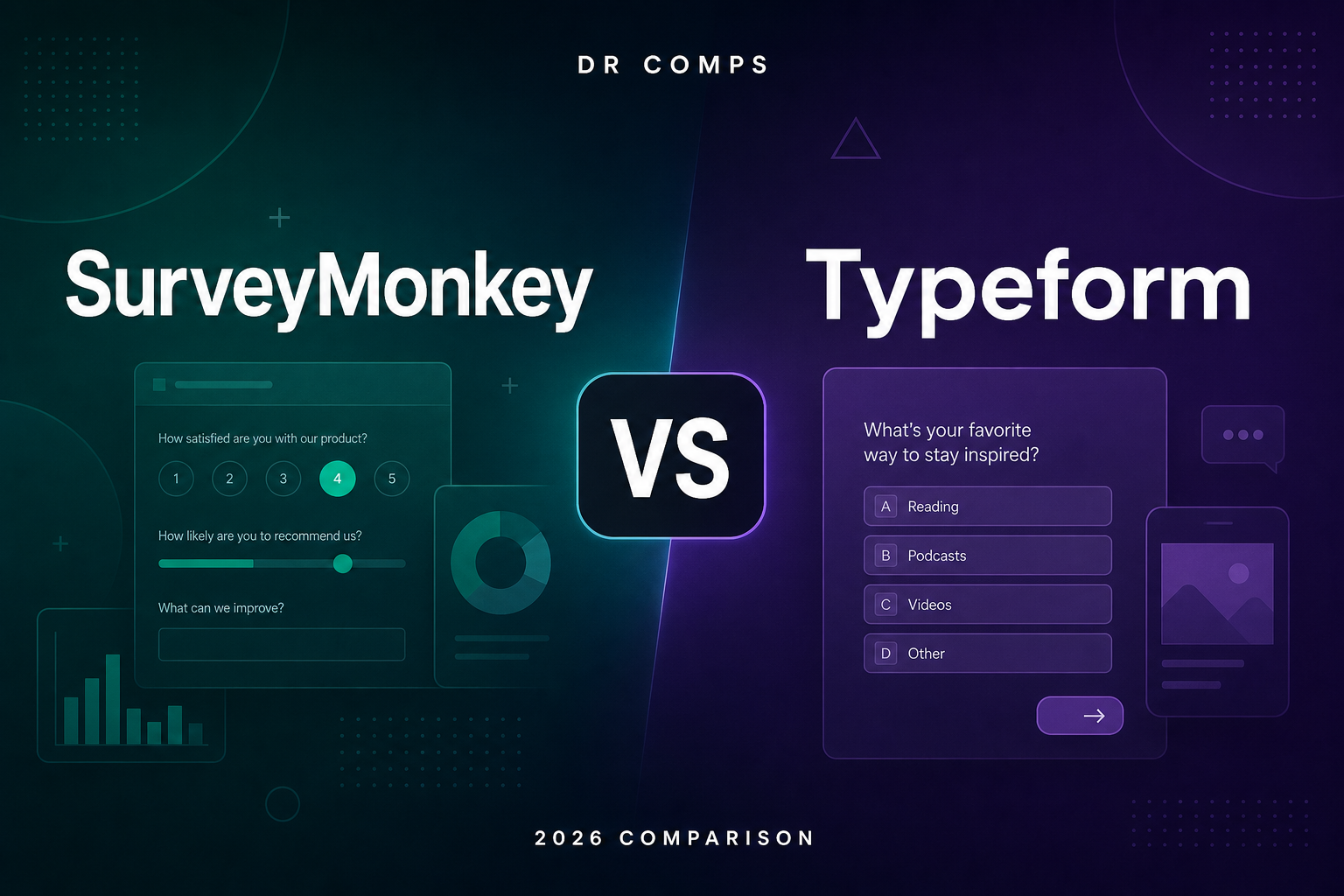
If you’re comparing SurveyMonkey vs Typeform in 2026, you’re usually deciding between two very different ways to collect responses. One is stronger when you care about survey rigor, team controls, and large-scale response analysis. The other is stronger when you care about conversion, brand experience, and forms that feel modern enough to improve completion rates.
SurveyMonkey is usually the better fit for organizations running serious surveys, internal research, feedback programs, and larger multi-user workflows. Typeform is usually the better fit for marketers, founders, and customer-facing teams that want beautiful conversational forms with stronger design flexibility and a lower-friction response experience.
Here is the practical buyer’s comparison.
Quick Comparison Summary
| Feature | SurveyMonkey | Typeform |
|---|---|---|
| Best For | Structured surveys, research, internal feedback, and teams that need admin controls | Lead capture, applications, quizzes, and branded forms that need higher completion rates |
| Core Strength | Survey depth, collaboration, dashboards, permissions, and response analysis | Conversational UX, strong design, logic flows, and better front-end form experience |
| Pricing Shape | Seat-based team pricing with response limits and overage charges | Account-based plans with monthly response caps and design/branding upgrades by tier |
| Workflow Bias | Research and operational feedback collection | Marketing, recruiting, onboarding, and conversion-oriented forms |
| Best Buying Trigger | You need stronger survey administration and reporting than a simple form builder gives you | You want a form experience people are more likely to finish and share |
Pricing Comparison
Pricing logic is a major difference here. SurveyMonkey leans toward team seats and larger response pools, while Typeform ties value tightly to response limits, branding, and front-end experience.
| Tool | Current Pricing Snapshot |
|---|---|
| SurveyMonkey | SurveyMonkey SurveyMonkey shows region-based pricing. On its current Mexico-facing team pricing page, Team Advantage starts at MX$390 per user/month billed annually and Team Premier starts at MX$850 per user/month billed annually, with annual response limits and overage charges for extra responses. SurveyMonkey also notes that additional paid-plan responses can trigger per-response overage fees. |
| Typeform | Typeform Typeform currently lists Basic at $29/month monthly or about $25/month annually, Plus at $59/month monthly or $50/month annually, and Business at $99/month monthly or $83/month annually. Monthly response caps scale from roughly 100 to 10,000 depending on plan. |
If your volume is high and your team needs multiple stakeholders, SurveyMonkey often feels more operationally natural. If your main concern is that ugly forms reduce conversion, Typeform often earns its keep despite stricter response ceilings.
SurveyMonkey Overview
SurveyMonkey still feels like the more traditional survey platform. That is not an insult. For many buyers, it is the point. The product is built around broad survey coverage, internal collaboration, dashboards, permissions, and the kind of response handling that matters when surveys become a recurring business process instead of a one-off landing page asset.
It is especially strong when you need dependable survey administration across teams, departments, or client accounts. It is usually less exciting visually, but more naturally suited to structured research and enterprise-style governance.
Typeform Overview
Typeform is still the form tool buyers reach for when completion rate and user experience matter. The one-question-at-a-time interface, visual polish, and stronger brand presentation give it a clear advantage for lead gen, applications, customer intake, and other moments where the form itself shapes how your brand feels.
The tradeoff is that Typeform’s pricing and response limits can become noticeable fast once volume grows. It is often the better front-end experience, but not always the cheaper operational system at scale.
Head-to-Head: Key Differences
Survey Depth vs Form Experience
SurveyMonkey is usually better when the survey itself is the product. Typeform is usually better when the respondent experience is the product. That distinction matters more than feature checklists.
Pricing Logic
SurveyMonkey tends to feel more seat-and-program oriented, especially for team deployments. Typeform feels more usage-and-experience oriented, where monthly response caps and branding features shape the plan choice quickly.
Team Collaboration
SurveyMonkey generally has the more natural posture for larger internal teams that need roles, permissions, shared assets, and formal reporting. Typeform supports team use, but it usually feels optimized first for creators and growth teams rather than research operations.
Design and Completion Rates
Typeform clearly wins on aesthetics and conversational feel. If your current forms feel cold, clunky, or drop off too early, Typeform is often the easiest upgrade. SurveyMonkey is serviceable, but it rarely feels as polished on the front end.
Best Use Cases
SurveyMonkey is a stronger choice for employee feedback, customer research, structured questionnaires, and ongoing insight programs. Typeform is a stronger choice for lead forms, waitlists, onboarding flows, quizzes, and customer-facing intake experiences where brand polish matters.
Who Should Choose SurveyMonkey?
Choose SurveyMonkey if: you need a more traditional survey platform for recurring research, internal collaboration, stakeholder reporting, and larger response programs.
Who Should Choose Typeform?
Choose Typeform if: you care more about form completion, brand experience, and creating forms that feel modern enough to help marketing, recruiting, and customer workflows convert better.
The Verdict
For most survey-heavy teams in 2026, SurveyMonkey is the better choice because it is more naturally built for research, collaboration, and structured response programs. For most customer-facing growth teams, Typeform is the better choice because it creates a better form experience and usually gets better engagement when design and flow matter. SurveyMonkey wins on operational survey depth. Typeform wins on UX and conversion.
Ready to Choose?
Try SurveyMonkey → | Try Typeform →
DrComps may earn a commission through affiliate links at no extra cost to you.
Try SurveyMonkey → | Try Typeform →
DrComps may earn a commission through affiliate links at no extra cost to you.
Comments (0)