Our Blog.
Rippling vs Gusto (2026): Which Payroll and HR Platform Is Better for Growing Businesses?
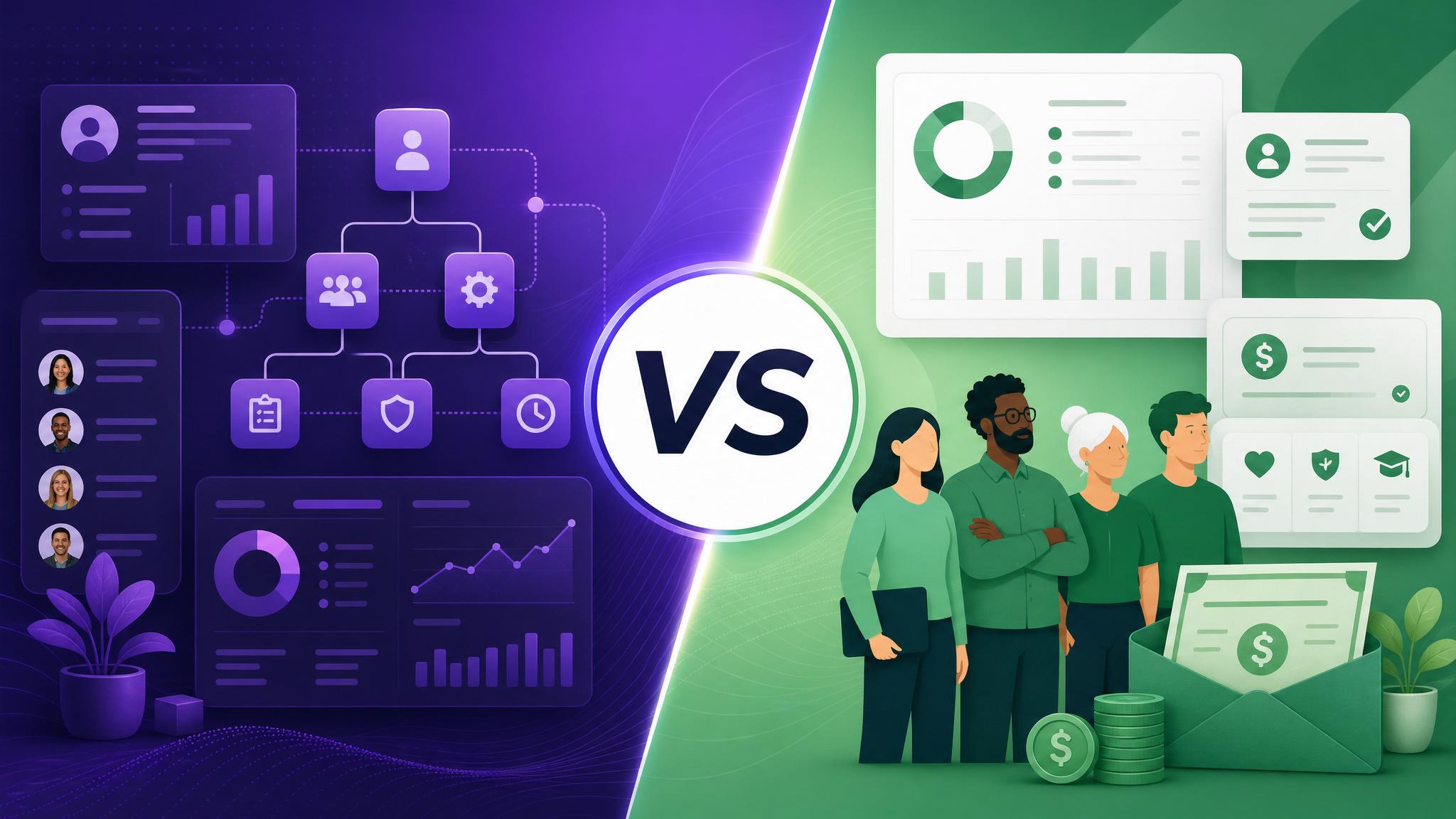
If you’re comparing Rippling vs Gusto in 2026, the real question is not which payroll tool can run payroll. Both can. The question is whether you need a simpler payroll-and-HR system for a growing small business or a broader workforce platform that can connect HR, IT, finance, and operations in one place.
Rippling is usually the better fit for companies that want a more expansive workforce operating system with stronger automation and more room to grow into complexity. Gusto is usually the better choice for small businesses that want payroll, HR basics, benefits, and compliance support in a cleaner, easier-to-manage package.
Here is the practical buyer’s comparison.
Quick Comparison Summary
| Feature | Rippling | Gusto |
|---|---|---|
| Best For | Growing companies that want HR, payroll, IT, and automation under one roof | Small businesses that want payroll and HR to stay simple, clear, and affordable |
| Core Strength | Platform breadth, workflow automation, and multi-function workforce management | Ease of use, payroll clarity, and SMB-friendly onboarding |
| Operational Style | More modular and expansive | More straightforward and payroll-centered |
| Complexity Ceiling | Higher ceiling as the business adds systems and processes | Best when the company wants capability without too much operational weight |
| Best Buying Trigger | You expect HR and operations complexity to keep growing | You want payroll and HR to work well without becoming an internal project |
Pricing Comparison
Pricing changes often, but here is the practical cost picture for a buyer comparing these tools in 2026.
| Tool | Current Pricing Snapshot |
|---|---|
| Rippling | Rippling Pricing is typically custom quote based, especially because buyers can add payroll, HR, IT, and other modules as the stack expands. |
| Gusto | Gusto Entry payroll plans commonly start around $49/month plus $6 per person, with higher tiers for stronger HR and compliance features. |
Gusto is usually easier to price and justify quickly. Rippling can create more long-term leverage, but it is rarely the lighter commercial decision.
Rippling Overview
Rippling stands out because it treats employee operations like one connected system instead of a small collection of separate admin tasks. Payroll matters, but so do onboarding, device management, app access, policies, approvals, benefits, and the workflows that break when those systems live in different tools.
That broader scope gives Rippling a higher upside for growing companies. If the business expects more headcount, more locations, more software, more internal controls, or more cross-functional process complexity, Rippling tends to age better. It gives operations leaders more room to automate and unify work that often becomes fragmented.
The downside is that broader platforms are heavier to buy and manage. Rippling makes the most sense when the company wants that extra system surface area and will actually use it.
Gusto Overview
Gusto remains one of the cleanest payroll buys for small businesses. Its appeal is simple: payroll is understandable, onboarding is approachable, and the platform gives business owners a solid HR foundation without making them feel like they are implementing enterprise infrastructure.
That is a real strength. Many companies do not need IT provisioning, layered workflow automation, or a bigger workforce operating system. They need payroll to run correctly, benefits to be manageable, and employee admin to stop consuming founder time. Gusto is usually better aligned with that reality.
The limitation appears when the company becomes more operationally complex. As more systems, controls, and internal stakeholders get involved, Gusto can start to feel narrower than teams want.
Head-to-Head: Key Differences
Platform Breadth
Rippling wins. It is designed to cover more of the employee lifecycle and more of the surrounding operational stack.
Ease of Use for Small Businesses
Gusto wins. It is usually simpler to understand, simpler to budget for, and less likely to feel overbuilt for an SMB environment.
Automation and Systems Leverage
Rippling has the edge when automation matters across HR, IT, and operations. If leadership wants one platform to connect more of the back office, Rippling is the stronger bet.
Payroll-First Value
Gusto is better when payroll and basic HR are the main job. It gives smaller teams what they need without forcing them into a broader systems decision.
Best Long-Term Fit
Rippling is the better long-term platform when complexity is clearly increasing. Gusto is the better long-term platform when the company wants dependable payroll and HR without inviting unnecessary admin weight.
Who Should Choose Rippling?
Choose Rippling if: your company wants a broader workforce platform, expects more operational complexity, or sees value in connecting payroll, HR, and adjacent systems under one operating layer.
Who Should Choose Gusto?
Choose Gusto if: you want payroll and HR to stay simple, you care about fast adoption, and your business does not need a larger workforce infrastructure play yet.
The Verdict
For growing companies that want more leverage across workforce operations in 2026, Rippling is the better choice. It wins on breadth, automation, and long-term scalability. For small businesses that mainly need payroll and HR to run cleanly without extra system weight, Gusto is the better buy. Rippling wins on platform ambition. Gusto wins on simplicity and SMB fit.
Ready to Choose?
Try Rippling → | Try Gusto →
DrComps may earn a commission through affiliate links at no extra cost to you.
Try Rippling → | Try Gusto →
DrComps may earn a commission through affiliate links at no extra cost to you.
Comments (0)