
Our Blog.
Bitwarden vs 1Password (2026): Which Password Manager Is Better for Teams and Individuals?
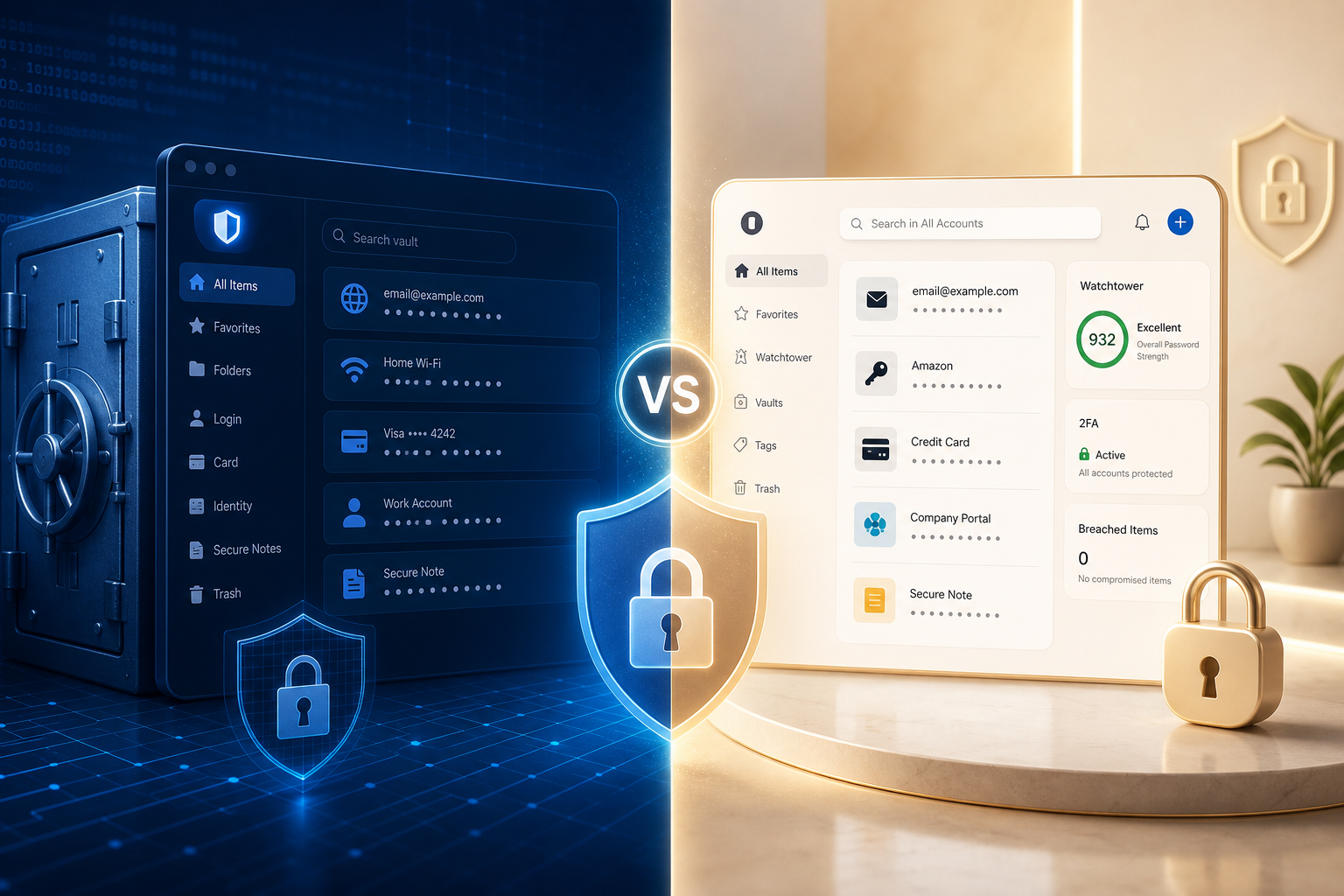
If you’re comparing Bitwarden vs 1Password in 2026, you’re usually deciding between an open-source password manager that wins on transparency and value, and a polished premium password manager that wins on user experience, admin depth, and broader business readiness.
Bitwarden is usually the better fit for buyers who want strong core password management, cross-device access, and lower pricing without giving up security fundamentals. 1Password is usually the better fit for teams and families that want a smoother onboarding experience, stronger sharing workflows, more refined admin controls, and premium polish across the whole product.
Here is the practical buyer’s comparison.
Quick Comparison Summary
| Feature | Bitwarden | 1Password |
|---|---|---|
| Best For | Cost-conscious individuals and teams that want open-source credibility and strong core password management | Teams and families that want premium UX, easier sharing, and stronger business administration |
| Core Strength | Value, transparency, self-hosting options, and broad device coverage | Polish, usability, Watchtower alerts, and more mature business workflows |
| Pricing Shape | Very low-cost premium tier and low family pricing | Premium-priced, but still reasonable for buyers who value experience and admin depth |
| Implementation Feel | Straightforward, practical, and efficient | More polished and guided, especially for non-technical users |
| Best Buying Trigger | You want secure password management with excellent value and optional self-hosting | You want a premium password manager that is easier to roll out and easier to live in every day |
Pricing Comparison
Pricing matters a lot in this category because the feature gap between password managers is smaller than buyers think. Cost, user experience, and admin convenience usually decide the winner.
| Tool | Current Pricing Snapshot |
|---|---|
| Bitwarden | Bitwarden Bitwarden publicly lists a Premium plan at $1.65 per month billed annually ($19.80/year) and a Families plan at $3.99 per month billed annually for up to six users. Bitwarden also offers a free tier with unlimited devices and unlimited passwords. |
| 1Password | 1Password 1Password publicly lists an Individual plan at $2.99 per month billed annually (or $3.99 monthly), a Families plan at $4.49 per month billed annually, a Teams Starter Pack at $19.95 per month for up to 10 users, and a Business plan at $7.99 per user/month billed annually. |
Bitwarden is the clear value leader. 1Password is the easier product to justify when smoother daily use, premium support, and business administration are worth paying extra for.
Bitwarden Overview
Bitwarden has built a strong reputation by doing the fundamentals well: secure vaults, broad platform support, password generation, passkey support, secure sharing, and open-source transparency. It appeals to both budget-conscious buyers and security-minded buyers who like the idea of inspectable software and optional self-hosting.
Its tradeoff is that the product can feel more utilitarian than luxurious. It is capable, but less refined than 1Password in the details that shape daily user satisfaction.
1Password Overview
1Password remains one of the most polished products in the category. The interface is cleaner, the setup flow feels friendlier, sharing is more elegant, and the product does a better job of making strong security habits feel natural rather than burdensome.
For business buyers, 1Password also has a stronger enterprise story. Role-based access, guest access, developer tooling, business integrations, and smoother administration make it easier to standardize across a growing team.
Head-to-Head: Key Differences
Value for Money
Bitwarden usually wins here. Its premium plan is dramatically cheaper than 1Password, and even its family pricing is hard to beat. If you want reliable password management without paying for polish, Bitwarden is the obvious choice.
User Experience
1Password usually wins here. The product feels more refined across desktop, mobile, browser extensions, sharing flows, and organization. That difference matters more than buyers expect because password managers are daily-use tools.
Business Administration
1Password has the stronger case for most teams. It offers a more mature business package, clearer role management, better guest access patterns, and a more enterprise-ready overall experience.
Security Posture and Trust
Both tools are credible choices. Bitwarden’s open-source model and self-hosting options appeal to buyers who want transparency and control. 1Password’s reputation, security model, and Watchtower alerts appeal to buyers who want a premium managed experience.
Best Buyer Profile
If the buyer is cost-sensitive, technical, or attracted to open-source software, Bitwarden is usually the better pick. If the buyer prioritizes premium usability, smoother rollout, and business-ready controls, 1Password is usually the better pick.
Who Should Choose Bitwarden?
Choose Bitwarden if: you want excellent password management at a very low price, you care about open-source transparency, or you want the option to self-host. It is especially strong for freelancers, families, startups, and practical IT teams that do not need a luxury layer.
Who Should Choose 1Password?
Choose 1Password if: you want the best day-to-day experience, easier secure sharing, cleaner onboarding for less technical users, and stronger administration for a growing team. It is usually the better fit for companies standardizing password security across many users.
The Verdict
For most value-focused buyers in 2026, Bitwarden is the better choice because it delivers the essentials at a price that is almost impossible to argue against. For buyers who want the most polished experience and a stronger business rollout story, 1Password is the better choice. Bitwarden wins on value and openness. 1Password wins on polish and operational maturity.
Ready to Choose?
Try Bitwarden → | Try 1Password →
DrComps may earn a commission through affiliate links at no extra cost to you.
Try Bitwarden → | Try 1Password →
DrComps may earn a commission through affiliate links at no extra cost to you.
Comments (0)