Our Blog.
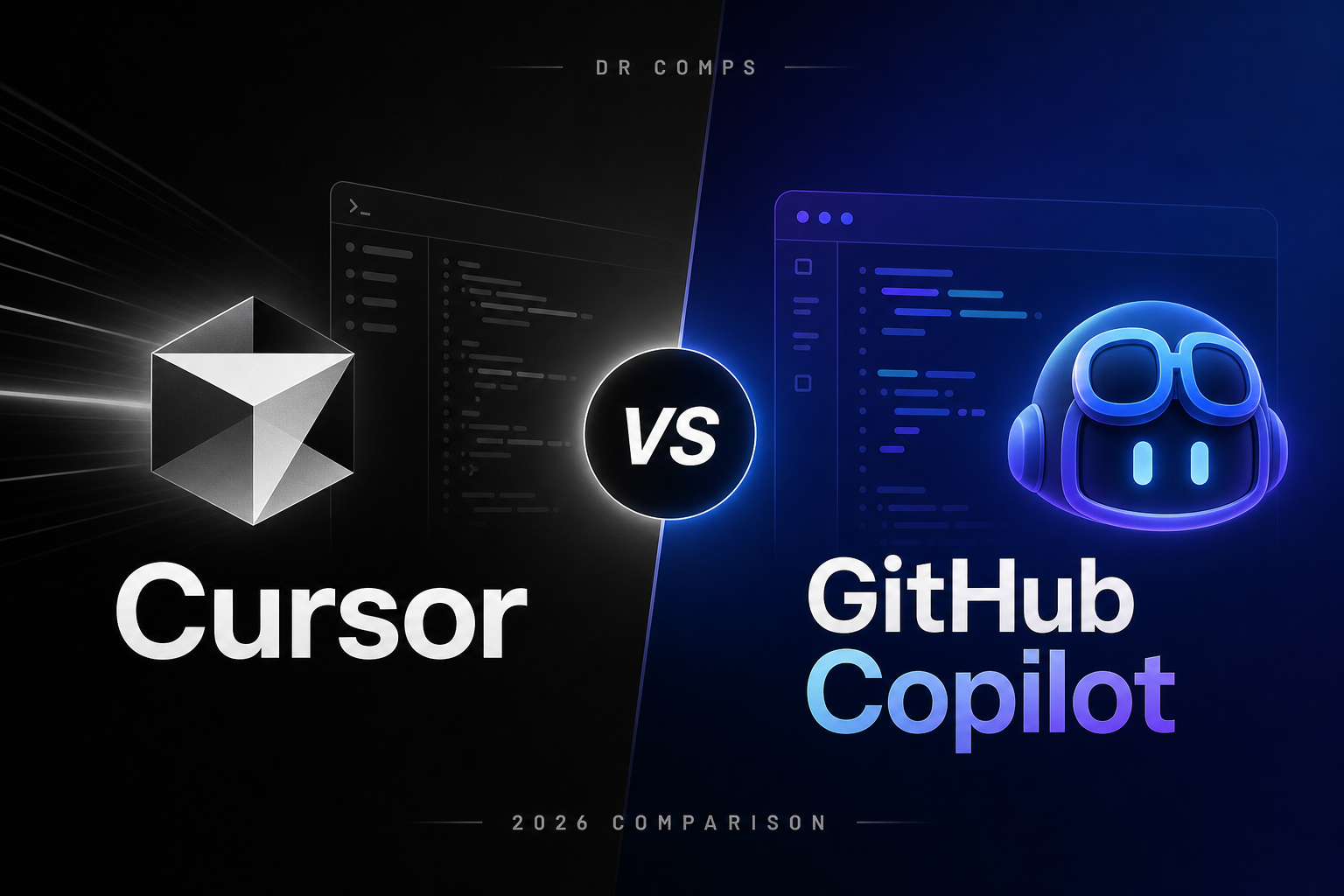
Cursor vs GitHub Copilot (2026): Which AI Coding Assistant Is Better for Developers?
If you’re comparing Cursor vs GitHub Copilot in 2026, you’re usually not deciding whether AI coding is useful anymore. You’re deciding whether you want an AI-native development environment built around agentic coding workflows or a broader assistant that plugs into the GitHub ecosystem and many existing IDEs.
Cursor is usually the better fit for developers who want their editor experience to revolve around AI agents, codebase reasoning, and fast iteration inside one purpose-built environment. GitHub Copilot is usually the better fit for teams that want broader IDE support, tighter GitHub integration, and a lower-friction rollout across existing engineering workflows.
Here is the practical buyer’s comparison.
Quick Comparison Summary
| Feature | Cursor | GitHub Copilot |
|---|---|---|
| Best For | Developers who want an AI-native editor and heavier agent workflows | Teams that want AI assistance across GitHub and existing IDEs |
| Core Strength | Purpose-built AI coding environment with strong codebase context and agent feel | Ecosystem reach, broad model access, and easy rollout inside GitHub-centric teams |
| Pricing Shape | Free hobby tier, then premium individual and team plans | Free entry tier, lower-cost Pro, then higher-usage Pro+ and business options |
| Implementation Feel | Best when developers are willing to change tools and habits | Best when teams want AI added to current workflows with less disruption |
| Best Buying Trigger | You want AI to be the center of the coding environment | You want standardization, GitHub alignment, and easier team-wide adoption |
Pricing Comparison
Pricing already hints at the difference in product strategy. Cursor pushes an AI-native editor with more premium usage tiers, while GitHub Copilot makes it easier to start cheap and scale up through GitHub-managed plans.
| Tool | Current Pricing Snapshot |
|---|---|
| Cursor | Cursor Cursor offers a free Hobby plan, an Individual plan at about $20/user/month, a Teams plan at about $40/user/month, and custom enterprise pricing. Its paid tiers focus on higher agent limits, frontier models, and team controls. |
| GitHub Copilot | GitHub Copilot GitHub Copilot offers a Free tier, a Pro plan at about $10/user/month, and a Pro+ plan at about $39/user/month, with business and enterprise options layered on top. The lower entry price makes it easier to deploy broadly before moving heavier users up. |
If you want the cheapest path to broad adoption, Copilot is easier to justify. If your team wants an AI-first coding environment rather than just AI features inside existing tools, Cursor can be worth the higher commitment.
Cursor Overview
Cursor is built around the idea that AI should not feel like a side panel bolted onto a traditional IDE. Its real appeal is that the editor, codebase context, inline assistance, agent workflows, and model access are all designed to feel like one system. For developers who want to refactor, generate, inspect, and iterate quickly with AI in the loop, that focus matters.
Its biggest advantage is an AI-native development experience.
GitHub Copilot Overview
GitHub Copilot is now much broader than autocomplete. It covers chat, agent workflows, code review, CLI, and multiple models, while staying tied to GitHub’s platform footprint. That makes it attractive for teams that want AI help across pull requests, repositories, editors, and developer workflows without standardizing on a brand-new editor.
Its biggest advantage is ecosystem reach with lower rollout friction.
Head-to-Head: Key Differences
Editor Experience
Cursor usually wins here for developers who want AI to feel native instead of bolted on. The whole product is shaped around that use case.
Workflow Disruption
GitHub Copilot usually wins for teams that do not want to move everyone into a new editor just to get AI gains.
GitHub Integration
Copilot has the edge if your organization already lives inside GitHub for repository management, reviews, and day-to-day engineering coordination.
Agent-Centric Coding
Cursor often feels stronger for power users who want larger AI-assisted edits, codebase reasoning, and more aggressive agent-style workflows inside the editor.
Team Standardization
Copilot is usually easier to standardize across mixed environments because it supports more editors and naturally fits GitHub-managed governance.
Best Buyer Profile
If the buyer is an individual developer or engineering team eager to rework how coding happens day to day, Cursor is often the better match. If the buyer wants a safer organizational rollout with broad compatibility and tighter GitHub alignment, Copilot is usually the smarter buy.
Who Should Choose Cursor?
Choose Cursor if: you want an AI-native coding environment, your team is open to changing editor habits, and power-user agent workflows matter more than staying close to legacy tooling.
Who Should Choose GitHub Copilot?
Choose GitHub Copilot if: you want easier deployment across existing IDEs, strong GitHub ecosystem leverage, and a lower-cost way to roll AI coding assistance out broadly.
The Verdict
For most buyers comparing these two in 2026, GitHub Copilot is the better choice when rollout simplicity, editor flexibility, and GitHub integration matter most. Cursor is the better choice when the goal is maximizing AI-native development speed for developers willing to adopt a new working style. Copilot wins on reach and standardization. Cursor wins on AI-first workflow design.
Ready to Choose?
View Cursor pricing → | View GitHub Copilot pricing →
DrComps may earn a commission through affiliate links at no extra cost to you.
View Cursor pricing → | View GitHub Copilot pricing →
DrComps may earn a commission through affiliate links at no extra cost to you.
Comments (0)