
Our Blog.
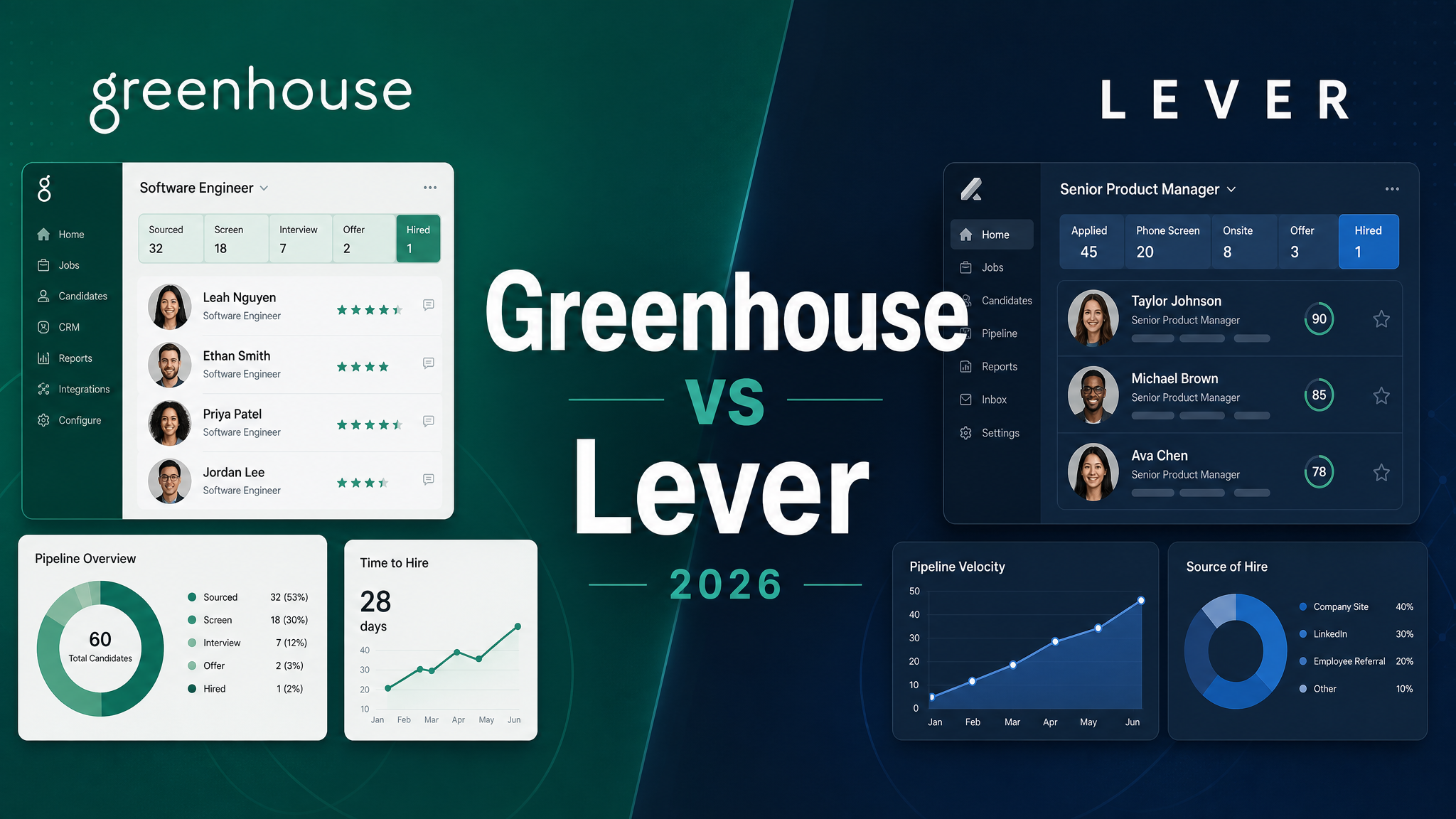
Greenhouse vs Lever (2026): Which ATS Is Better for Growing Recruiting Teams?
If you’re comparing Greenhouse vs Lever in 2026, you’re usually choosing between two premium recruiting platforms built for structured hiring teams that need more than a basic applicant tracking system.
Greenhouse is usually the better fit for organizations that want strong interview structure, hiring governance, reporting control, and enterprise-ready process depth. Lever is usually the better fit for teams that want ATS and CRM together in a more unified workflow, with easier candidate nurturing and a faster path to operational simplicity.
Here is the practical buyer’s comparison.
Quick Comparison Summary
| Feature | Greenhouse | Lever |
|---|---|---|
| Best For | Mid-market and enterprise teams that want rigorous, structured hiring operations | Teams that want ATS plus CRM in one simpler recruiting workflow |
| Core Strength | Interview process design, scorecards, governance, and process consistency | Unified recruiting pipeline, nurturing, sourcing workflow, and recruiter usability |
| Pricing Shape | Custom quote across Core, Plus, and Pro plans | Custom quote based on team size, hiring needs, and add-ons |
| Implementation Feel | More structured and policy-oriented from the start | More unified and recruiter-friendly, with less process friction early on |
| Best Buying Trigger | You want repeatable, auditable hiring with strong interviewer discipline | You want sourcing, nurturing, and hiring in one easier day-to-day system |
Pricing Comparison
Pricing is not transparent in the way SMB buyers usually want, so this decision is more about operating model than sticker price. Both vendors sell through custom quotes, but they package value differently.
| Tool | Current Pricing Snapshot |
|---|---|
| Greenhouse | Greenhouse Greenhouse publicly presents Core, Plus, and Pro tiers, but requires a demo and custom quote rather than publishing fixed pricing. Core focuses on structured hiring fundamentals, Plus adds more automation and reporting depth, and Pro adds governance, security, and developer-oriented controls. |
| Lever | Lever Lever also uses custom pricing. Its pitch centers on one AI-powered hiring platform with ATS and CRM together, with optional add-ons like candidate insights, AI screening, and onboarding. Pricing scales around team size, hiring volume, and add-on needs. |
If procurement wants predictable list pricing, neither platform is ideal. If the goal is choosing the better recruiting operating system, the feature mix matters more than the quote format.
Greenhouse Overview
Greenhouse remains one of the strongest structured hiring platforms for companies that want consistency across interview kits, scorecards, approvals, reporting, and hiring process design. It is particularly strong when talent leaders care about interviewer discipline, standardized evaluation, and scalable governance across departments or regions.
Greenhouse tends to shine in more mature recruiting organizations. The tradeoff is that it can feel heavier if your team mainly wants speed, easier nurturing, and a more unified recruiter workflow without as much process ceremony.
Lever Overview
Lever is built around the idea that sourcing, nurturing, and applicant tracking should live in one connected workflow. That makes it attractive for teams that do proactive recruiting and want a system that feels more like a combined ATS and CRM rather than a more segmented talent operations stack.
Lever often wins points for day-to-day usability and pipeline continuity. The tradeoff is that teams with very strict process governance sometimes prefer Greenhouse’s more explicit structure and enterprise hiring controls.
Head-to-Head: Key Differences
Structured Interviewing and Governance
Greenhouse usually wins here. Its reputation is built on structured hiring, interviewer consistency, scorecards, approvals, and process control. If your recruiting leader wants a system that enforces discipline, Greenhouse is typically the stronger pick.
CRM and Candidate Nurturing Flow
Lever usually wins here. Because ATS and CRM are positioned together more tightly, recruiter workflows for sourcing, nurturing, and moving candidates through the funnel often feel more unified.
Ease of Adoption
Lever often feels simpler for teams that want one recruiting workspace with less operational overhead. Greenhouse is not hard to use, but it is more likely to reward teams that already know how they want hiring to run.
Reporting and Process Maturity
Both platforms are capable, but Greenhouse is often the better fit when hiring operations maturity is a core buying requirement. Lever is strong when the team wants useful reporting without centering the entire purchase on process governance.
Best Buyer Profile
If the buyer is a VP of Talent or People Ops leader standardizing structured hiring across a growing company, Greenhouse is usually the better match. If the buyer is a recruiting team that wants a strong ATS+CRM workflow with easier day-to-day sourcing and pipeline management, Lever is usually the better match.
Who Should Choose Greenhouse?
Choose Greenhouse if: you want structured interviews, repeatable scorecards, hiring governance, strong approvals, and a platform that scales well with complexity across departments, brands, or regions.
Who Should Choose Lever?
Choose Lever if: you want a unified recruiting workflow that combines ATS and CRM strengths, supports proactive sourcing, and feels easier for recruiters who live in candidate pipelines every day.
The Verdict
For most teams comparing these two in 2026, Greenhouse is the better choice when structured hiring, process rigor, and governance are the priority. Lever is the better choice when recruiter workflow simplicity, sourcing continuity, and ATS+CRM unity matter more. Greenhouse wins on hiring discipline. Lever wins on recruiting flow.
Ready to Choose?
View Greenhouse pricing → | View Lever pricing →
DrComps may earn a commission through affiliate links at no extra cost to you.
View Greenhouse pricing → | View Lever pricing →
DrComps may earn a commission through affiliate links at no extra cost to you.
Comments (0)